
The Power of Poetry and Prophecy
The Divine ComedyDante's reflection on the role of the poet as a divinely inspired prophet, a theme woven throughout the Comedy.
increasing Bearing strength in each event
 decreasing
Bearing strength in each eventdecreasingDante's Invocation to the Muses
The Call for Inspiration
Inferno
Dante invokes the Muses and his own genius at the start of his journey, asking for help to remember what he saw.
Purgatorio and Paradiso
He calls upon the Muses again, especially Calliope, and later Apollo, to grant him poetic power for the arduous task of describing Paradise.
Brunetto Latini on Eternal Fame
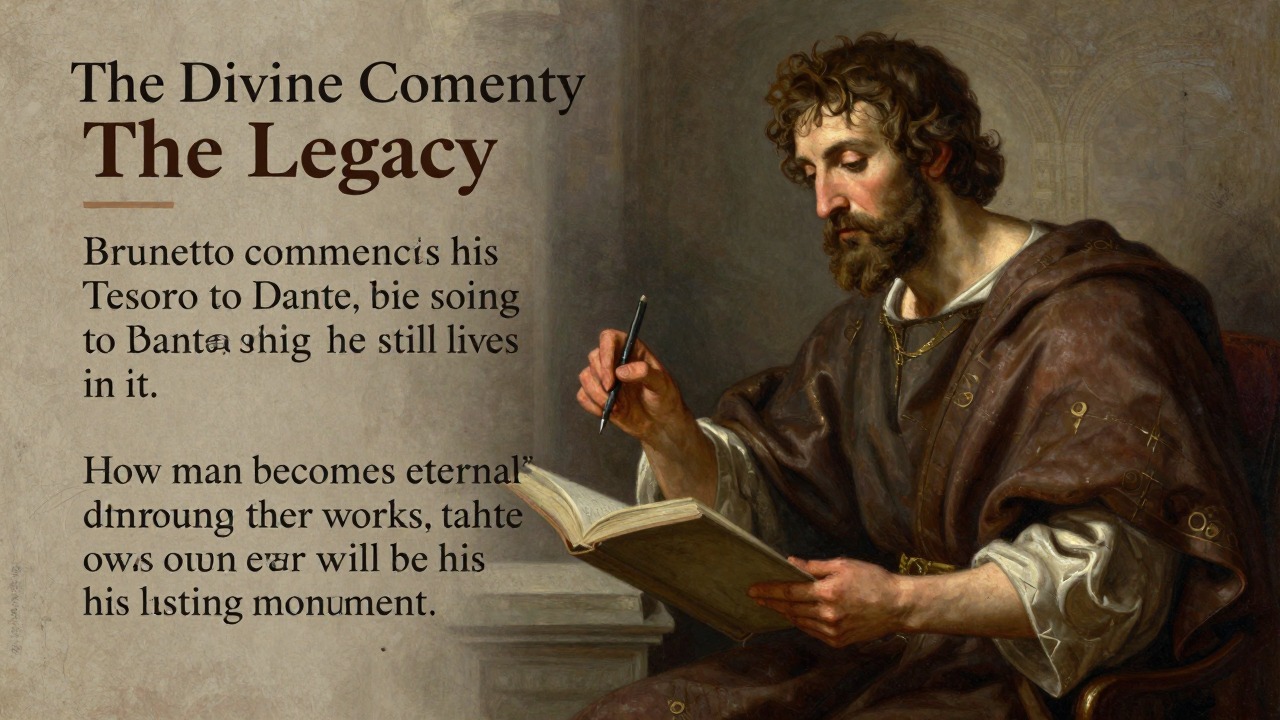
The Tesoro
The Legacy
Brunetto commends his Tesoro to Dante, saying he still lives in it. This emphasizes the power of literature to grant immortality.
The Teaching
Brunetto taught Dante 'how man becomes eternal' through his works. Dante's own poem will be his lasting monument.
Oderisi d'Agobbio on the Vanity of Fame
The Transience of Glory
The Art of Illumination
Oderisi, a famous illuminator, laments that his fame has been surpassed by Franco Bolognese. He reflects on the fleeting nature of artistic reputation.
The Examples
He cites Cimabue and Giotto in painting, and Guido Guinizelli and Guido Cavalcanti in poetry, showing how quickly fame fades. Dante himself will be surpassed.
Cacciaguida's Commission
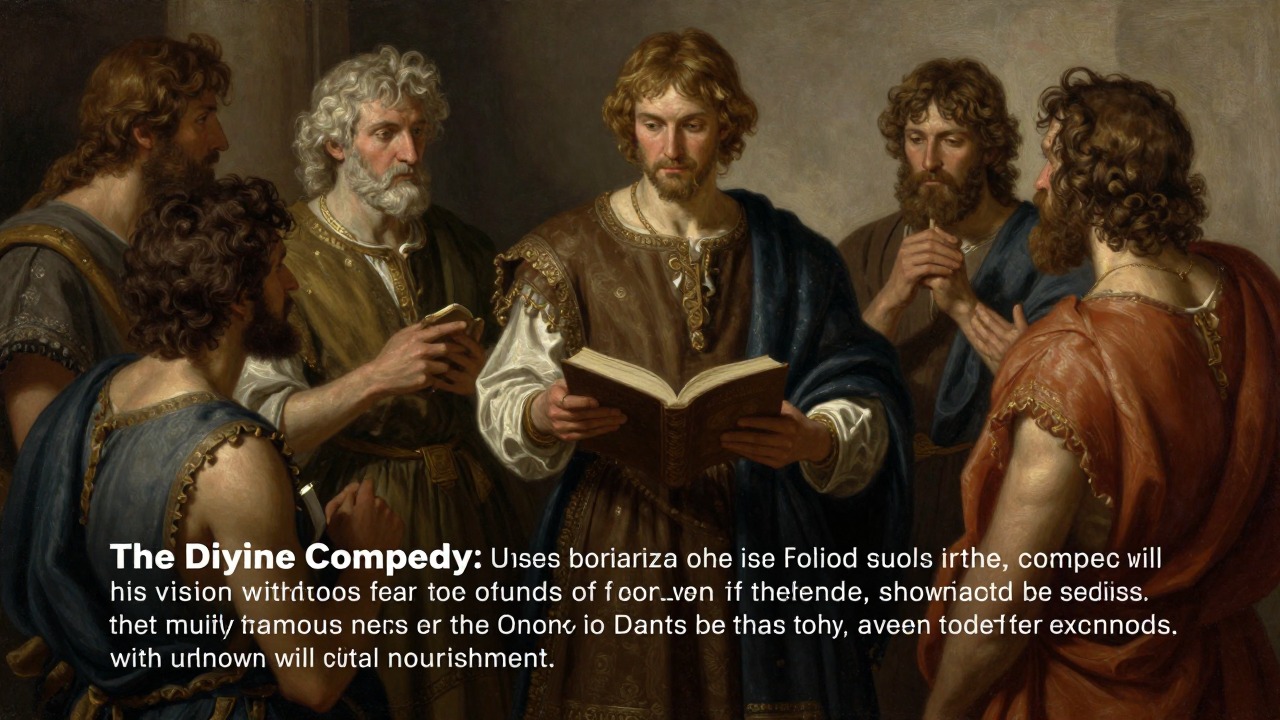
The Poet's Duty
The Bold Truth
Cacciaguida urges Dante to write his vision without fear, even if it offends. The truth, though bitter, will be vital nourishment.
The Famous Souls
He explains that only famous souls are shown to Dante because examples with unknown roots would not convince readers. Dante's poem must be a witness to the truth.
The Sweet New Style
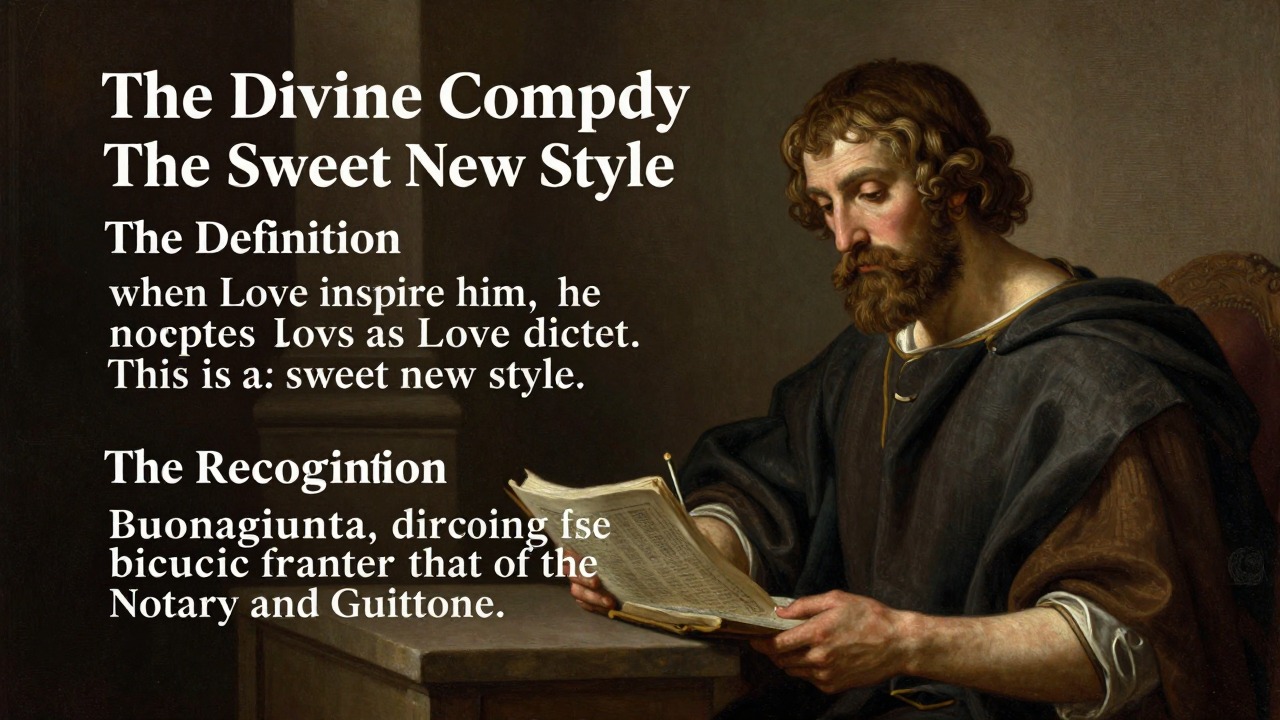
The Poetic School
The Definition
Dante explains his poetic method: when Love inspires him, he notes and writes as Love dictates. This is the 'sweet new style.'
The Recognition
Buonagiunta acknowledges that Dante's style surpasses that of the Notary and Guittone. Dante's poetry is directly inspired by divine love.
At the beginning of each canticle
In the seventh circle of Hell, during the encounter
On the first terrace of Purgatory, among the proud
In the Heaven of Mars, after the prophecy
On the sixth terrace of Purgatory, with Buonagiunta da Lucca
